
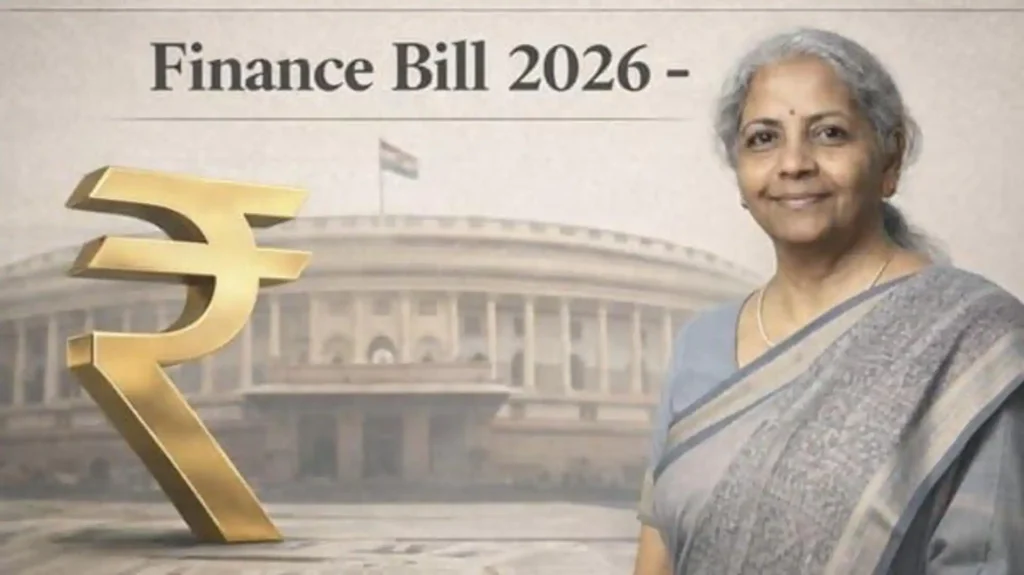
The clock is ticking. On 1 April 2026 just seven days away from today (24 March). India’s landmark Income Tax Act, 2025 replaces the 65-year-old Income Tax Act, 1961. The new simplified 536-section code aims to slash litigation, modernise compliance, and introduce a uniform “tax year”.
But there’s a catch: the Finance Bill, 2026, which packs the bulk of operational amendments into the new Act is still on the tables of the Parliament.
Finance Bill 2026 – Status?
- 1 February 2026: Finance Minister Nirmala Sitharaman introduced the Finance Bill, 2026 (Bill No. 3 of 2026) in the Lok Sabha alongside the Union Budget 2026-27.
- As of 23 March 2026: The Bill is listed for consideration and passing in the Lok Sabha (per PRS India & Sansad listings). It has not been presented in the Rajya Sabha yet and awaits Presidential assent.
- Update: The H’ble Finance Minister, Mrs. Nirmala Sitaraman, has tabled the Finance Bill 2026 in the Rajya Sabha on Monday, the 23rd of March, 2026.
- Effective date of key provisions: 1 April 2026 (sections 2–113 + related clauses).
This leaves the government machinery with an extremely tight window to notify rules, update the Income Tax e-filing portal, revise forms, and train officers — all before taxpayers file returns under the new regime.
113 Clauses, Major Structural Changes — What the Finance Bill, 2026 Brings
The Bill proposes sweeping changes to the Income Tax Act, 2025 (and residual provisions of the 1961 Act):
- Omissions: At least 2 sections removed (e.g., redundant penalty provisions 443 & 447).
- Insertions: New sections introduced (e.g., 354A for merger of non-profits, 147A for faceless assessment clarification).
- Substitutions: Multiple sections fully replaced (including 427, 428, 446, 454, 480, 481 and others. easily 9+ major substitutions).
- Other highlights:
- Rationalised penalties & decriminalisation (simple imprisonment + fines instead of rigorous in many cases).
- Ease-of-living measures: Extended revised return timelines, relaxed TDS/TCS rates, new foreign asset disclosure scheme for small taxpayers.
- Sector boosts: Exemptions for data centres, IFSC extensions, critical minerals prospecting deductions.
- Compliance tweaks: Updated return due dates, immunity expansions, MAT rationalisation.
Without the Finance Act receiving assent and rules being fully notified, these cannot be seamlessly coded into the new Income Tax Act, 2025 or the portals.
Why the Next 7–10 Days Are Make-or-Break
Presentation of Budget in the Parliament is just the first step towards the amendment in the tax laws. The Bill is presented in the Lok Sabha (House of the People) for consideration. Once the Lok Sabha Approves the Bill, it is then tabled in the Rajya Sabha (House of the Representatives). Once the bill is passed in the Rajya Sabha also, it then is sent to the President of India for approval. The Bill comes to become an Act only after the official Presidential Assent. Though only a customary step, the Post of the President of India demands the respect it deserves.
Tax professionals and businesses are watching anxiously. Even if the Bill is passed in Lok Sabha this week and moves swiftly to Rajya Sabha:
- Presidential assent usually follows quickly for Money Bills.
- CBDT must issue notifications aligning rules with the new Act.
- IT portal (incometax.gov.in), utility downloads, challan systems, and Form utilities need urgent patching.
A delay beyond 1 April would force transitional workarounds — something the government has avoided in past transitions but could strain taxpayer confidence this time.
Government’s likely playbook: Fast-track passage (Budget Session ends 2 April), issue immediate notifications, and activate a parallel “legacy + new Act” view on portals during the overlap period.
What This Means for You
- Salaried & Individuals: New due dates, easier revised returns, potential relief in small foreign asset disclosures.
- Businesses & Startups: Data centre incentives, co-operative deductions, buy-back taxation clarity.
- Tax Consultants: Massive upskilling needed on the 536-section code + 100+ amendments.
- Compliance Teams: Update ERP/software by 31 March or face filing glitches.
Final Takeaway
The Finance Bill, 2026 is not just another budget document. It is the operational engine that will power India’s first modern Income Tax Act in over six decades. With only days remaining, the coming week will test the efficiency of parliamentary and executive coordination like never before. Will the portals be fully updated by 1 April? Will taxpayers face a smooth switch or a bumpy transition? Stay tuned. This is one deadline India cannot afford to miss.
What are your thoughts? Drop a comment: Are you ready for the new Income Tax Act 2025? Have you started mapping your compliance to the changes?