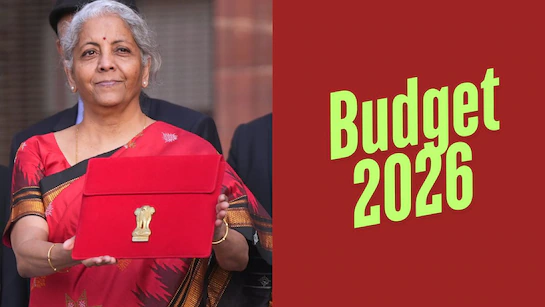
On 1st February 2026, the H’ble Finance Minister Mrs.Nirmala Sitharaman presented the India Budget 2026 in the Lok Sabha. In the Budget presented by the H’ble FM various proposals and reforms were introduced in sectors such as Manufacturing, Infrastructure, Medical, Education, Tourism, Heritage and Culture Tourism, Sports, and various other sectors.
The H’ble FM has also made proposals on Direct and Indirect Taxes. In this article we will deeply understand the proposals made by the H’ble FM in Direct taxes.
Proposals made in the Budget 2026 – Direct Taxes
Proposals for changes in TDS and TCS rates:
| Particulars | Original Rate of TDS/TCS | Revised Rate of TDS/TCS |
|---|---|---|
| TCS on sale of Overseas Tour Program Package | 5% or 20% | 2% (without any limit) |
| TCS on pursuing education and for medical purpose under LRS | 5% | 2% |
| Supply of Manpower services (Brought under payment to Contractors) | 1% or 2% | |
| Alcoholic liquor, scrap and minerals | 1% | 2% |
| Tendu leaves | 5% | 2% |
Interest awarded by Motor Accident claims Tribunal to a natural person will be exempt from Income Tax and no TDS will be deducted on this interest
Changes in ITR Deadlines:
- Time limit for filing ITR-1 & ITR-2 (Individuals) → 31 July
- Time limit for Non-audit business cases and Trusts → 31 August
- Time limit for filing revised return has been extended from 31st December to 31st March with a nominal fee.
Foreign Assets Disclosures (one-time window (6 months))
Applicable to two categories of taxpayers:
- Category A: Undisclosed income / assets ≤ ₹1 Cr
- Need to pay 30% of the Fair Market Value of the asset or undisclosed income as tax and
- 30% as additional tax in lieu of penalty and would get immunity from prosecution
- Category B: Undisclosed income / assets ≤ ₹5 Cr
- Immunity from prosecution and penalty will be available
- Pay ₹1 lakh as fee
- No penalty or prosecution for non-disclosure of non-immovable foreign assets upto ₹20 lakh with retrospective effect from 01.10.2024.
Rationalizing Penalty and Prosecution:
- Single combined order for assessment + penalty
- No interest on penalty amount during appeal
- Pre-deposit for appeal reduced from 20% to 10%
- Immunity framework extended to misreporting (100% additional tax)
- Updated returns can been filed even after reassessment proceedings have been initiated with a 10% rate over and above the applicable rate.
- Penalty for misreporting is same as under reporting. However the taxpayer has to pay 100% of the tax amount as an additional tax over and above the tax and interest due.
- Penalties for failure to get accounts audited, non-furnishing of transfer pricing audit report and default in furnishing statement for financial transactions are to be converted into fee from penalty.
- Decriminalisation of minor offences
- Maximum imprisonment reduced to 2 years.
Cooperative Sector reliefs:
- Deduction extended to cattle feed and cotton seeds produced by the members of the society.
- Deduction allowed under new tax regime for inter-cooperative society dividend income distributed to its members.
- Exemption allowed for a period of 3 years for dividend income received by a notified national co-operative federation, on their investments made in companies up to 31.01.2026. Exemption allowed only for dividends distributed to its member co-operatives.
Safe Harbour :
- Services such as software development, IT enabled, knowledge process outsourcing and contract R&D to be clubbed under a single category of Information Technology Services.
- Safe Harbour margin of 15.50% applicable.
- Threshold limit for availing safe harbour for IT services has been increased to ₹2,000 crores from ₹300 crores.
- Safe harbour of 15% on cost in case company providing data services from India is a related entity.
- 2% margin for component warehouse in a bonded warehouse.
Reliefs & Exemptions:
- Tax holiday period till 2047 to any foreign company that provides cloud services to customers globally by using data centre services from India.
- Exemption for 5 years from Income Tax to non-residents who provides capital goods equipment or tooling, to any toll manufacturer in a bonded zone.
- Exemption to global (non-India sourced) income of a non-resident expert, for a stay period of 5 years.
- Exemption from Minimum Alternate Tax (MAT) to non-residents who pay tax on presumptive basis.
Buy Back Taxation:
- To tax buyback of shares as Capital Gains.
- To avoid misuse of tax arbitrage, promoters to pay additional buyback tax.
- Tax rate: 22% for corporate promoters and 30% for non-corporate promoters.
Proposals of MAT (Minimum Alternate Tax)
- MAT to become final tax from 1 April 2026
- MAT reduced to 14% from the existing 15%.
- Set-off of MAT credit is allowed to companies only in new regime.
- Set-off of available credit is to be allowed to an extent of 1/4th of the tax liability in the new regime.
- Accumulated MAT credit till 31st March 2026, will be available for set-off.
Other proposals
- Income Tax Act 2025 to come into effect from 1st April 2026.
- Income Tax Rules and Forms to be notified soon.
- A scheme for small taxpayers to obtain a lower or nil deduction certificate instead of filing an application with the Assessing officer.
- Depositories to accept to Form 15G or Form 15H from the investors and provide it to the companies for non-deduction of TDS on dividends.
- TDS on sale of immovable property by a non-resident is proposed to deducted and deposited through resident buyer’s PAN instead of TAN.
- Constitute a committee of MCA and CBDT for incorporating requirements of Income Computation and Disclosure Standards (ICDS) in the Indian Accounting Standards (Ind AS)