
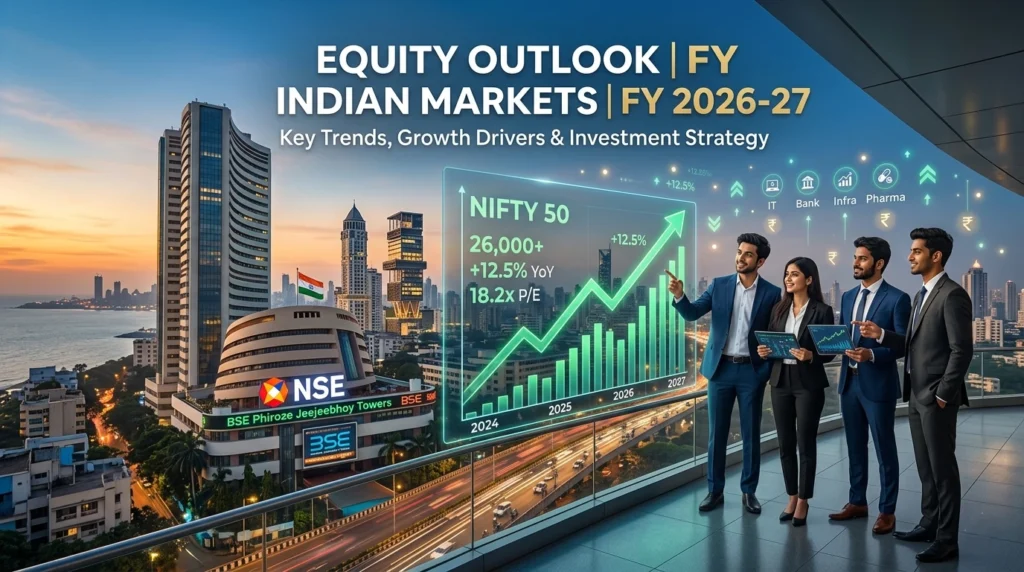
What about the Equity Outlook?
FY26 turned out to be one of the toughest years for Indian equity investors in recent memory, specially in the post-covid economy. The Nifty 50 closed the fiscal year with a 3.6% loss, its weakest annual performance since FY 2019-20 and ranked at the bottom among 15 major global indices. For retail investors who had enjoyed the post-pandemic rally, the near-flat two-year CAGR of just 0.01% felt especially painful.
As FY27 begins, the macro environment remains complex. Geopolitical tensions, elevated crude prices, a weaker rupee, and record foreign outflows have created fresh uncertainties. At TaxRoutine, we’ve analysed the latest reports and compiled the ground realities, expert views from leading market voices, and our own observations on what this means for the equity outlook of Indian investors.
Note: In this post, whereever FY26 appears, the same should be read as FY 2025-26 and wherever FY27 appears, it should be meant as ongoing F.Y 2026-27
What Really Hit Indian Markets in FY26?
Indian equities entered FY26 already grappling with stretched valuations, uneven earnings growth, sluggish domestic demand, and US trade tariff concerns. The hike in securities transaction tax on derivatives added to the pressure.
Then came the geopolitical trigger: US-Iran tensions escalated, with Brent crude spiking to $118.3 per barrel in late March 2026 (from a one-year average of $68.7). India, which imports over 85% of its crude needs, felt the impact immediately resulting in wider current account deficit, higher inflation, and rising bond yields. The 10-year G-Sec yield averaged 6.8% in March and even crossed 7% in early April. The rupee weakened sharply to ₹94.65 per dollar, prompting foreign portfolio investors to pull out a record ₹1.81 lakh crore from Indian equities! The highest annual outflow on record.
Goldman Sachs cut its FY26 GDP growth forecast by 1.1 percentage points to 5.9% and raised its inflation estimate to 4.6%, while expecting a 50 basis point repo rate hike.
Corporate Earnings Outlook: Still Under Pressure
Higher crude prices are feeding directly into input costs for sectors like paints, packaging, logistics, aviation, ceramics, oil marketing companies, and gas utilities. Systematix Research estimates that if crude averages $100 per barrel, raw material costs could rise nearly 20%, outpacing expected sales growth of 12%, and compress operating margins by as much as 36%. Near-term earnings visibility remains weak.
Valuations: Caution Still Prevails
Markets have corrected, but valuations are not yet in deeply attractive territory. The Nifty 50’s P/E has moderated to around 19.9x, with analysts expecting further derating toward 18x amid higher risk-free rates and slower growth. On a relative basis, Indian equities continue to trade at a ~20% premium to the MSCI Emerging Markets Index (16.6x). Large-caps appear relatively better placed, while mid- and small-cap segments still command significant premiums (56% and 34% respectively to the Nifty 50).
Why a Sharp Rebound May Not Happen Quickly
Unlike the swift recoveries after 2008 or Covid, this cycle is different. High public debt and persistent inflation have limited policymakers’ room for aggressive stimulus. Crude prices are expected to stay elevated, and earnings visibility remains poor. Most experts believe any recovery in FY27 will be slower and more uneven.
What Experts Are Saying on Sectors and Allocation
Analysts remain broadly positive on India’s long-term equity story, citing demographics, formalisation, digital infrastructure, and rising financialisation of savings as structural tailwinds.
- Shreyash Devalkar (Axis Mutual Fund) highlights that geopolitical events create short-term volatility but rarely change long-term outcomes. He emphasises domestic earnings growth, balance sheet strength, and valuations as the real drivers.
- Businesses linked to domestic demand with solid balance sheets — such as financials, capital goods, and healthcare — are seen as better positioned.
- Selective opportunities are being noted in hospitals, hotels, capital goods, defence, railways, and infrastructure.
- Bhautik Ambani (AlphaGrep) and Anirudh Garg (INVasset PMS) both point to India’s structural macro strength and view Indian equities as attractive in emerging markets over a 3+ year horizon.
Raamdeo Agrawal (Motilal Oswal) notes that after a reasonable correction, the next 12 months could see upside outweighing downside, but investors should remain prepared for 10–15% volatility and avoid leverage.
Shyam Sekhar (ithought Financial Consulting) stresses the importance of assessing whether companies can grow earnings and whether valuations justify holding them, especially as many portfolios built in easier times now look vulnerable.
Vinay Paharia (PGIM India Mutual Fund) sees the current phase as favourable for high-quality, high-growth businesses where both valuation and earnings are aligned for the long term.
The Case for International Diversification
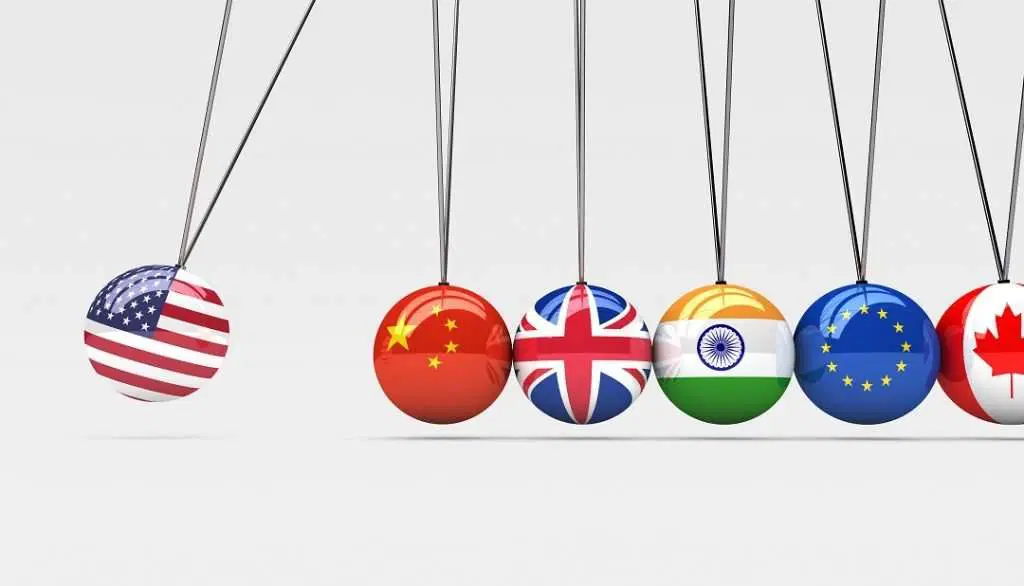
A recurring theme among analysts is the need for global exposure to manage India-specific volatility. International markets don’t always move in tandem with domestic indices, offering broader sector diversification. A weaker rupee can further enhance returns when converting foreign gains back to INR.
In Q1 2026, global funds showed greater resilience (average return of -6.8%) compared to diversified equity funds (-12.8%). Investors can access this through international mutual funds, global ETFs, or directly via the Liberalised Remittance Scheme (up to $250,000 per year).
Conclusion
The FY26 correction has been painful, but it has also brought some sanity back to valuations in parts of the market. India’s long-term growth drivers remain intact, yet near-term risks from oil prices, inflation, and global geopolitics are real. The key takeaway from expert commentary is clear: discipline, quality focus, and diversification (both within India and globally) matter more than ever in uncertain times. Investors with 3–5 year horizons are better placed to weather the cycle.
This is a period that rewards patience and a clear-eyed assessment of risks rather than chasing quick rebounds.
What are your biggest concerns heading into FY27 — crude prices, valuations, or global tensions? Share in the comments below.
Disclaimer: This post is for informational purposes only and is based on publicly available analysis and expert commentary as of April 2026. It does not constitute investment advice, portfolio recommendations, or any form of solicitation. Past performance is not indicative of future results. Please consult your own financial advisor and tax consultant before making any investment decisions.